
How much does it cost to publish a book? That question feels like trying to guess the number of jellybeans in a jar while blindfolded. Most authors start with stars in their eyes.
They finish with a bank statement that looks like a horror movie script. We strip away the mystery. We examine the real numbers behind your manuscript. Liberty Book Writers cuts through the noise. We treat publishing like a business.
If you ignore the math, you lose the game. We break down every line item, so you know exactly where your capital goes. Expect a hard look into the economics of authorship.
We value precision over platitudes. Your project deserves a budget that makes sense in the real market. Do not let sentiment drive your spending. Let the data dictate your next move. Here is the reality of your publishing expenses.
How Much It Costs to Publish a Book the Real Cost Drivers?
Understanding how much it costs to publish a book requires checking the friction points between production and market success. You pay for quality, labor, and infrastructure.
Every step involves a choice. You select a cheap path, and your product suffers, or you pay premium rates for professional intervention. Most authors fail because they view publishing as an expense rather than a capital investment.
You need to analyze the fixed costs versus variable output. Fixed costs include editing, cover design, and interior formatting. Variable costs fluctuate based on printing volume and marketing reach.
If you refuse to budget for the professional tiers, you accept the limitations of a hobbyist result. We focus on the professional standard. You pay for what you want to achieve.
Stop guessing your numbers and start building a spreadsheet that reflects reality. The market rewards the prepared publisher.
One Time Setup Costs What You Pay Up Front

One-time setup costs define your barrier to entry. These payments create the foundation for your book. You cannot skip these steps. When you build a professional product, you spend money on marketing strategy and metadata setup right away.
We see authors skimp here and suffer for years. Marketing strategy plans require roughly 910 dollars. You need this roadmap to find your audience. Advertising setup costs another 780 dollars.
You learn to manage campaigns without wasting your budget. Metadata and blurb setup costs 570 dollars. This ensures your book ranks correctly. Email marketing setup runs about 910 dollars.
These investments prevent you from shouting into the void later. You spend this money once.
The structure remains for the life of your book. If you ignore these setup fees, you fail to build a machine that sells copies. Treat this as infrastructure development.
Editing and Proofreading Budgets for Quality Results

Editing determines whether your book succeeds or ends up in the trash bin of failed manuscripts. Do not trust your spellchecker. You need professional eyes. Editorial assessments for early drafts run around 2000 dollars.
This report fixes story structure and commercial viability. Developmental editing costs 2880 dollars. This deep work tackles characterization, pacing, and craft.
Copy editing focuses on sentence clarity and flows around 2160 dollars. It removes inconsistencies that ruin reader trust. Proofreading acts as the final gatekeeper for 1600 dollars.
It catches grammar errors that linger after deep edits. You choose your level of intervention based on manuscript health. If your prose remains weak, no marketing strategy saves the book.
You pay for expertise that elevates your narrative. These prices reflect the labor required to polish a rough draft into a marketable asset. Invest in your editorial core today.
| Service | Description | Average Cost |
|---|---|---|
| Editorial Assessment | Review for early stage rewrites | $2,000 |
| Developmental Editing | Structural edit on character and plot | $2,880 |
| Copy Editing | Prose clarity and consistency | $2,160 |
| Proofreading | Spelling and grammar final check | $1,600 |
Cover Design and Formatting Costs What Affects the Price

Your cover represents your sales pitch. Readers judge your book by the thumbnail before they read a single sentence. We categorize cover design by genre because the market demands specific visual tropes. Romance and children’s books cost roughly 720 to 740 dollars.
These genres rely on established aesthetic codes. Romantasy commands a higher premium, around 3950 dollars, due to complex illustrative requirements. Sci-fi and Action genres hover around 960 to 1070 dollars. You pay for design expertise that signals genre compliance to the target audience.
If you choose a generic template, you lose potential buyers instantly. Formatting requires similar attention to detail. You cannot shove a raw text file onto a publishing platform and expect professional results.
You pay for a clean, readable layout that handles typography correctly. When you ignore design standards, you broadcast amateur status to every potential customer. Buy the professional look.
| Genre | Cost |
|---|---|
| Action | $960 |
| Biographies and Memoirs | $740 |
| Children’s | $740 |
| Fantasy | $1,370 |
| Romantasy | $3,950 |
| Science Fiction | $1,070 |
Typesetting and Interior Layout Expenses for Technical Clarity
Typesetting involves more than hitting the Enter key. You create a reading experience. Poor typesetting creates eye fatigue. Readers abandon books with bad margins, incorrect kerning, or jagged line breaks.
You pay for an interior layout that respects the reader’s cognitive load.
Professional typesetters manage orphans, widows, and chapter start placements. This technical process ensures the text flows naturally across the physical page or the digital screen.
When you manage your own layout, you create amateur mistakes that undermine your credibility. Readers perceive sloppy formatting as a lack of quality control.
We advise investing in custom typesetting that matches your genre standards.
You want a book that looks like it belongs on a bestseller shelf. Technical clarity in your layout signals that you value the reader’s experience. Spend the capital here to secure a polished final product that commands respect.
ISBN and Metadata Fees What They Cost and Why They Matter
ISBNs and metadata act as your book’s passport and locator beacon. You cannot sell in traditional channels without a unique identifier. The ISBN tracks your book through the supply chain.
You might try free ISBNs from platforms, but you lose control over them. A custom ISBN makes you the publisher of record. Metadata covers everything from your book description to your keyword tags. You pay for search visibility.
If your metadata remains poor, the algorithms ignore your book. You waste time and money. We focus on shaping your book’s descriptions and categories to ensure it appears for the right search queries.
You need this data infrastructure to function in the digital marketplace. When you ignore metadata, you disappear from discovery tools.
This is a technical requirement for success. Treat ISBNs and metadata as essential utilities that enable your book to exist and perform online.
Printing Costs Print on Demand vs Traditional Runs
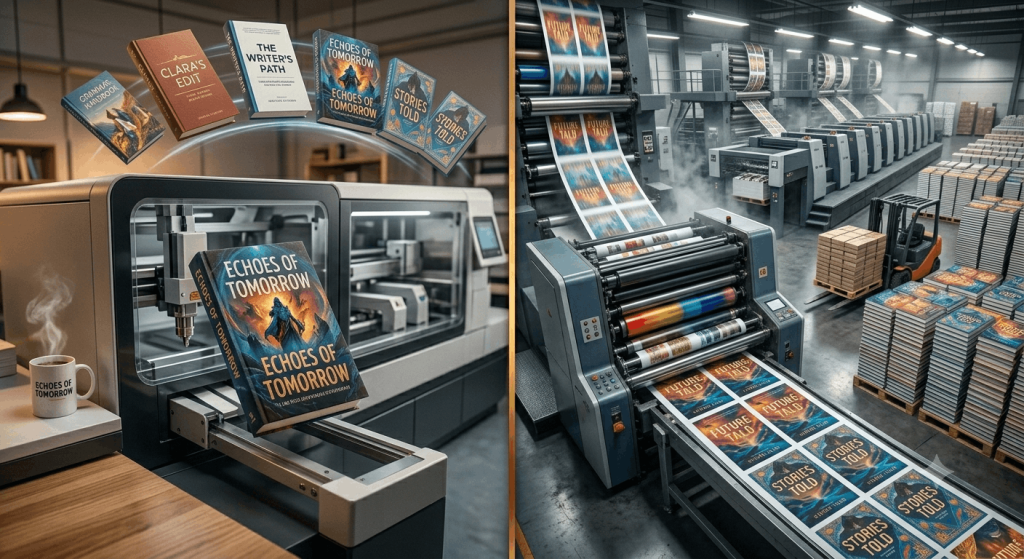
Printing costs depend on the method you choose. Print on Demand or POD allows you to print one book per order. You eliminate inventory risks. You pay a higher per unit price, but you never store unsold boxes in your garage.
Traditional offset printing significantly lowers your per-unit cost, but you commit to thousands of units upfront. You need capital for this. You also need a distribution plan to move those units.
If you select POD, you can easily integrate with global retailers. The platform handles shipping, printing, and returns. You trade higher unit margins for a lower barrier to entry.
If you choose offset, you gamble on volume. We recommend starting with POD to test your market performance.
Once you know your sales velocity, you calculate if offset printing provides a viable return on investment. Choose your print strategy based on your current sales data.
Distribution and Fulfillment Fees How Books Actually Get to Readers
Distribution fees determine how your book reaches readers’ hands. When you publish through major retailers, they take a cut for the privilege of listing your title.
You pay for shelf space, order processing, and delivery logistics. These fees eat into your royalty percentage.
You need to understand the difference between gross revenue and net profit.
If you use third-party distributors, you add another layer of cost. We suggest analyzing the reach versus cost for every distribution channel.
Amazon provides massive reach but demands specific adherence to their formatting guidelines.
Independent bookstores require different logistics. You need to build a strategy that balances visibility with profitability. Do not chase every distribution opportunity.
Focus on where your specific genre audience buys books. You pay for access to readers. Keep your distribution costs lean by targeting high-conversion channels rather than broad exposure.
Publishing Platforms and Service Fees Comparing Common Options
Publishing platforms offer different service tiers. You can find self-publishing aggregators that distribute for a fee or a percentage of sales. You find direct publishing platforms that offer higher royalties for exclusivity.
You pay for user interface, transaction handling, and payment processing. We compare these options based on your goals.
If you want speed, you choose a major platform with built in audiences. If you want control, you look at independent distribution services.
You must read the terms. Some contracts trap you with restrictive clauses that limit your future rights. We value platforms that protect your rights and make your royalties transparent.
Evaluate the costs of payment processing fees against the platform’s ability to drive traffic.
A cheap platform that hides your book costs you more in lost sales than a premium platform that provides real visibility. Choose your vehicle wisely.
Ongoing Expenses Royalties and Marketing Costs to Plan For
Ongoing expenses determine the long-term viability of your book project. You cannot publish and walk away. Successful authors treat their books as active assets.
You need to calculate your minimum sales to break even based on your royalty per book.
If you invest 1000 dollars and make 3 dollars per book, you need 334 copies to break even. If you spend $5,000, you need 1,000 copies at a $ 5 royalty rate. This math keeps you honest. Marketing budgets never disappear.
You pay for ongoing advertising, mailing list maintenance, and promotional content. If your sales drop, your marketing spend must remain stable to keep the engine running.
We track these costs religiously. You need a profit-and-loss statement for every project.
Stop guessing your bottom line. Use data to determine if your marketing efforts actually produce a return on investment.
| Total publishing cost | Royalty per book | Minimum sales to break even |
|---|---|---|
| $1,000 | $3 | 334 copies |
| $3,000 | $4 | 750 copies |
| $5,000 | $5 | 1,000 copies |
Frequently Asked Questions
Publishing costs range from zero dollars to over fifteen thousand dollars depending on your path. If you choose the DIY route, you save money but risk product quality.
Most serious authors invest between $3,000 and $5,000 in professional editing and design. You pay for the expertise required to make your book competitive.
Most independent authors spend between two thousand and five thousand dollars to produce a polished book. This budget covers professional editing, custom cover art, and interior layout services.
You might save money by doing tasks yourself, but professional results demand paid help. Quality of service determines your final cost more than any other single factor.
Independent publishing requires upfront capital, while traditional publishing costs you nothing but time and potential earnings. You pay for all production costs when you publish independently.
Traditional publishers cover these expenses but keep most of your royalties. You choose between paying cash today for higher long-term royalties or trading your rights for a smaller cut.
Amazon KDP costs nothing to upload and list your title. You only pay when you sell copies, as Amazon takes a percentage of your royalty. Your real costs come from the preparation phase.
You still need to pay for editing, cover design, and marketing to make your book stand out in the crowded marketplace.
Genre heavily influences your budget. A complex fantasy novel requires more editing and cover art than a simple memoir.
Your choice between professional services and DIY methods also changes the total price. Length impacts editing fees, while marketing strategies determine your final expenditure. You control the price by selecting specific providers for your book production.
You can upload a document to digital platforms without spending a penny. You might face serious quality issues if you skip professional editing and design. Readers notice typos and amateur covers immediately.
While you technically publish for free, you pay in lost sales and poor reviews. A free book rarely achieves real market success.
Ghostwriter fees vary based on experience and manuscript length. Professionals charge between 5,000 and 30,000 dollars or more for a full book project.
You pay for their time, skill, and expertise. You can find cheaper options on freelance sites, but you often sacrifice quality and narrative voice when you choose bargain rates.
The cheapest method is to do everything yourself. You write, edit, format, and design your cover without hiring help. You use free publishing platforms like KDP.
You save money, but you risk creating a product that fails to compete. Your book needs professional polish to attract readers. You save cash but lose potential sales and credibility.
Editing costs depend on the level of service and word count. Developmental edits for a full novel often run several thousand dollars. Copy editing and proofreading cost slightly less, usually by the word or page. You get what you pay for in this industry.
Never cut corners on editing because readers spot amateur mistakes instantly.
Beginners often underestimate the hidden costs of a professional book. You need editing, design, formatting, and marketing to succeed.
Many new authors try to save money by doing these tasks themselves, which results in a low-quality product. You pay for the labor of skilled professionals who turn your manuscript into a real asset.
Conclusion
Publishing your book requires clear financial planning. You now know the costs for editing, design, and marketing. Stop guessing and start budgeting for professional results. Your manuscript deserves a polished finish that commands reader attention.
Liberty Book Writers helps you navigate these expenses and reach your target audience.
Please feel free to contact us today to help turn your vision into a successful market reality.